
Welcome to CataractLens.ca
A free resource created by eye-care practitioners and advocates to help Ontario residents understand their cataract surgery options and rights.
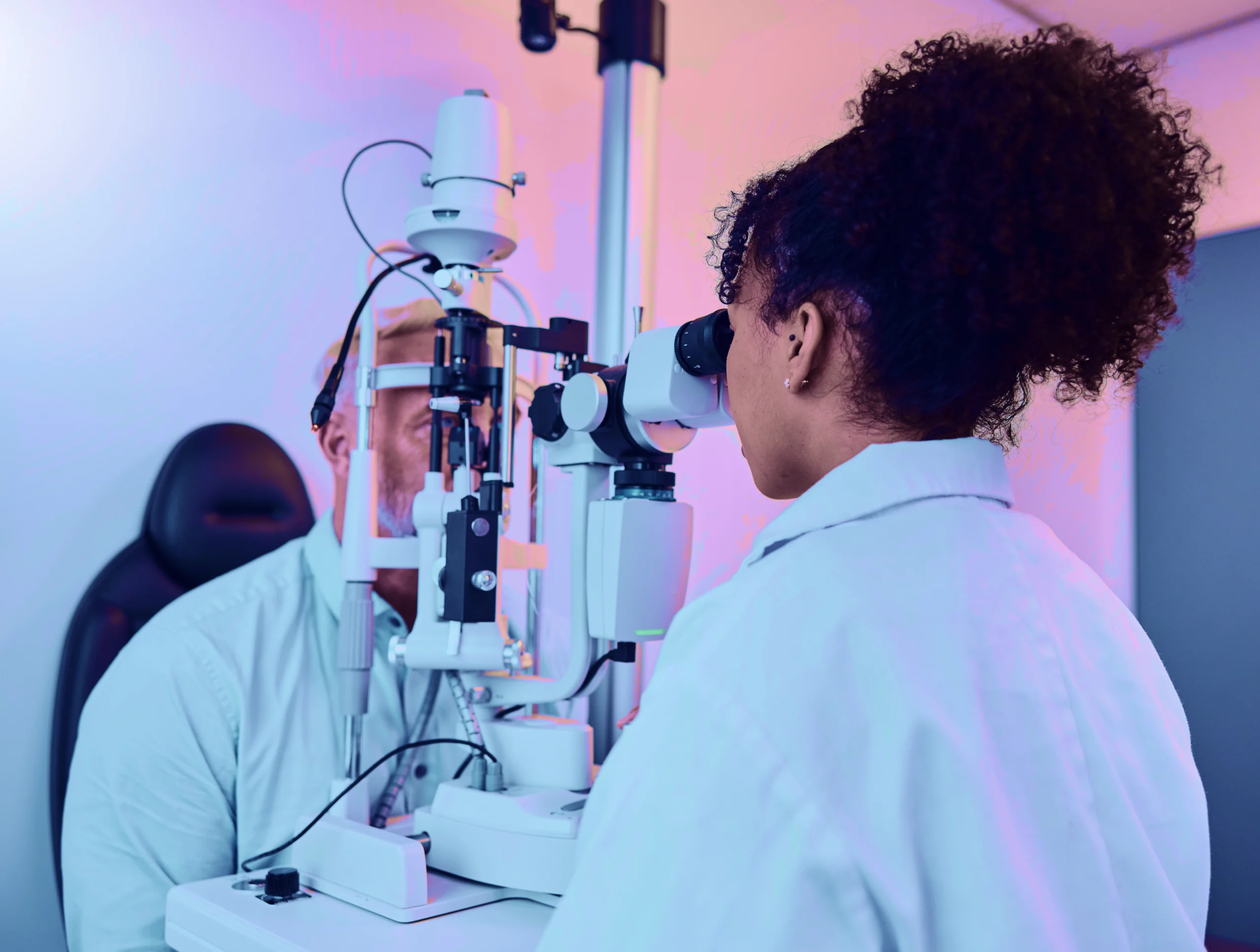
Quick Facts About Cataract Surgery
- Historically, cataract surgery took between 1 to 2 hours to complete
- Over the last 3 decades, cataract surgery has become safer, more efficient and more predictable.
- Initially the goal of surgery was to remove the cataract, and most patients were left without a lens implant and wore very thick glasses after surgery. Over time, lens implants became more commonplace and reduced the need to wear thick glasses, although glasses were needed. Nowadays, due to advancements in lens measurements and lens calculations many patients may be able to reduce their need to wear glasses.
- While the primary goal of cataract surgery remains to remove the cloudy lens (cataract) and clear up vision by restoring the passage of light into the eye, innovations in advanced testing and lens implants now allow for the potential of enhancing vision and reducing dependence on glasses and contact lenses. Many of these are considered optional and non-medically necessary uninsured services.
- Today, cataract surgery takes between 10 and 20 minutes per eye and is the most common surgery in Ontario, with an estimated 200,000 cases performed each year. Many patients choose upgraded testing and lens implants to provide greater precision and/or reduced need to wear glasses.
Our content is broken into two sections –
A Four-Part Learning Series and Additional Resources
Our Four-Part Learning Series
Your guide to cataract surgery in Ontario—your options, your rights, your care.
Part 1
The basics. An overview of cataract surgery, your options, and your rights.
1.1 – What Are Cataracts and What Is Cataract Surgery?
1.2 – What Optional Services Can I Include with My Cataract Surgery?
1.3 – What Are My Rights as a Patient?
Part 2
Where will my surgery take place? An overview of surgery facilities and how they are funded.
2.1 – Where Can My OHIP-Covered Cataract Surgery Take Place?
2.2 – How Does Funding Work for OHIP-Covered Cataract Surgery?
2.3 – How Does Partially OHIP-Funded Cataract Surgery Work?
Part 3
What can I expect with my surgery? Learn about the surgery, recovery, and the risks.
3.1 – What Can I Expect Before and During Surgery?
3.2 – What Will My Recovery Look Like?
3.3 – What Are the Risks of Cataract Surgery?
Part 4
Additional learnings.
4.1- What Is Covered by OHIP for Cataract Surgery?
4.2 – What Are Upgraded Testing Options?
4.3 – What Are Upgraded Lens Options?
4.4 – What Are Additional Upgraded Services?
Part 1: The basics
- Read Text
- Listen To Audio
1.1 – What Are Cataracts and What Is Cataract Surgery?
Your eye works by focusing light through a clear lens. That light travels to the back of the eye, where the retina sends signals to the brain. This is how we see.
Over time, the lens in your eye can harden and become cloudy. This condition is called a cataract. It’s a natural part of aging and happens to everyone eventually. The cloudy lens makes it harder for light to pass through clearly, causing blurry or dim vision. If untreated, cataracts can continue to worsen and may eventually lead to vision loss.
Cataract surgery is a procedure that removes the cloudy lens and replaces it with a clear, artificial one. This allows light to pass through the eye more normally again.
In Ontario, if your ophthalmologist determines that cataract surgery is medically necessary, the procedure is covered by OHIP. Fully covered cataract services in Ontario are of high quality. This includes surgeries done in both hospitals and private surgical centres, though some details may vary depending on the facility. Also included as part of OHIP coverage are standard testing for the artificial lens implant and a standard artificial lens implant.
As part of cataract surgery, some patients may choose optional services that go beyond the basic medical service. These may include upgraded advanced testing or upgraded lenses to enhance vision and/or reduce the need for glasses. These extra services are not covered by OHIP and must be paid for by the patient.
It’s important to know that these enhancements are entirely optional. Choosing not to have them does not affect your access to surgery.
In the next chapter, we’ll explain how these optional services differ from standard cataract surgery and why they may be offered.
Key Takeaways:
• Cataracts are caused by natural aging and lead to cloudy vision
• Surgery replaces the cloudy lens with a clear, artificial one
• Medically necessary surgery is covered by OHIP and of high quality
• Optional upgrades are available but not required and not covered by OHIP
• Being informed of and understanding these options allows for informed consent and selecting the best fit for you or a loved one
1.1 – What Are Cataracts and What Is Cataract Surgery?
- Read Text
- Listen To Audio
1.2 – What Optional Services Can I Include with My Cataract Surgery?
The main purpose of cataract surgery is to remove the clouded lens that’s affecting your vision and replace it with a clear, artificial one. This is the medically necessary part of the procedure and is fully covered by OHIP for eligible patients.
However, the artificial lens used in standard cataract surgery does not adjust focus like the natural lens once did. As a result, many people will still need to wear glasses after surgery—even if they didn’t wear them before developing cataracts.
Patients are provided an opportunity to select optional services or upgrades as part of their surgery. These can include more detailed diagnostic testing or special types of artificial lenses that can enhance vision and/or reduce the need for glasses. These are sometimes referred to as “upgraded services,” “custom vision correction” or “refractive cataract surgery.” These upgrades can improve the precision of the visual and refractive outcome of your procedure customized to your eye, reduce the need to wear glasses, and/or improve your visual quality after surgery.
Because these services go beyond what is considered medically necessary, they are not covered by OHIP. Patients who choose them must pay out of pocket.
These upgraded services may be offered as an optional refractive package as part of surgery or as separate individual services. Either way, you are entitled to a breakdown of any optional service you have decided to pay for yourself.
Whether done at a hospital or a private centre—these upgraded options are:
• Voluntary
• Paid for by the patient if chosen
• Separate from the standard OHIP-covered service
• Not required for you to receive standard cataract surgery
It’s important to understand the distinction between medically necessary cataract surgery and these optional enhancements. In the next chapter, we’ll explain what your rights are when you’re presented with these choices.
Key Takeaways:
• Cataract surgery is covered by OHIP when it’s medically necessary
• Some patients may choose optional upgrades for customized vision correction that improve precision, reduce the need to wear glasses and/or improve the quality of your postoperative vision
• These enhancements are not covered and must be paid for out of pocket
• Choosing not to upgrade does not affect your access to care
1.2 – What Optional Services Can I Include with My Cataract Surgery?
- Read Text
- Listen To Audio
1.3 – What Are My Rights as a Patient?
If your ophthalmologist has diagnosed you with a cataract that requires surgery, the standard procedure—including standard testing, the standard lens, and the surgery itself—is fully covered by OHIP.
You also have the right to be informed of all appropriate options, including both those that are covered by OHIP and those that are not. This helps you make the choice that’s right for you.
You only pay out of pocket if you choose optional upgrades—such as upgraded lens types, advanced testing, or astigmatism management. These enhancements are not medically necessary and are not required in order to access cataract surgery.
If you do choose an upgraded lens, the value of the OHIP-covered lens must be subtracted from your bill. This ensures you’re only paying the difference, not the full cost. Hospital and surgery centers are permitted to add an administrative fee for the handling of upgraded lenses.
You cannot be required to pay for medically necessary services. You also cannot be denied access to OHIP-covered surgery if you decide not to purchase enhancements. You must also be given the option to have fully insured standard cataract surgery if you are considering optional upgrades.
Optional upgrades cannot be used to shorten wait times. Hospitals and clinics are not allowed to offer or suggest that paying out-of-pocket will give you faster access to surgery.
Facilities must clearly explain the cost of any non-insured services, and you must give your informed consent before being billed. As a patient, you always have the right to ask questions about anything you’re being charged for.
If you feel your rights are not being respected, there are steps you can take. You can obtain another opinion or speak to your primary eye care provider. You can contact the appropriate provincial agency to file a concern — information is available in the Resources section of this website.
To support informed decision-making, we’ve also provided a Patient Rights Acknowledgment Form. This can be used to help you and your doctor go over your choices clearly before surgery.
In the next section, we’ll look at where surgeries are performed, how they’re funded, and how your rights apply in different settings.
Key Takeaways:
• OHIP covers the standard cataract surgery
• Optional upgrades are voluntary and must be clearly explained
• You can’t be denied access or charged for medically necessary care
• You have the right to ask questions and seek support if needed
1.3 – What Are My Rights as a Patient?
Part 2: Where will my surgery take place?
- Read Text
- Listen To Audio
2.1 – Where Can My OHIP-Covered Cataract Surgery Take Place?
Cataract surgery in Ontario doesn’t always happen in a hospital. While public hospitals have traditionally been the main setting, today, many cataract surgeries are also performed in private surgical centres.
This shift has been made possible by improvements in technology and surgical techniques. In 2023, the Ontario government expanded the use of private centres by funding a select number of them directly. The goal is to improve access and reduce wait times.
This approach isn’t entirely new. Similar models have been used in other provinces for years—and even in Ontario on a smaller scale. Private surgical centres can be either for-profit or not-for-profit organizations.
Both hospitals and private centres are licensed and regulated by the provincial government. Although they are governed by different organizations, all must meet established standards for safety, infection control, and quality of care.
Each year, the Ontario government assigns a certain number of surgeries to each facility based on the needs of the local community. Facilities are then paid for each surgery they perform—up to their assigned limit.
Regardless of where your surgery takes place, your OHIP coverage applies the same way. Optional upgrades may be offered in either setting, but your right to receive fully funded care remains unchanged.
In the next video, we’ll look more closely at how OHIP funding works for these surgeries.
Key Takeaways:
• Cataract surgery can take place in hospitals or private surgical centres
• Both types of facilities are licensed and follow provincial safety standards
• The Ontario government funds both settings for medically necessary surgery
• Your rights and OHIP coverage are the same in either location
2.1 – Where Can My OHIP-Covered Cataract Surgery Take Place?
- Read Text
- Listen To Audio
2.2 – How Does Funding Work for OHIP-Covered Cataract Surgery?
When you receive surgery, the cost for the medically necessary parts of the service is covered by OHIP. But behind the scenes, that funding is divided into two parts.
The first part is the facility and/or technical fee. This goes to the clinic, hospital or private surgical centre. It covers the cost of running the facility for the medically necessary services—things like the space, equipment, standard supplies, and staff. It also covers the standard testing, the standard lens and the equipment to remove your cataract. Not all facilities that perform surgery receive funding from the government. In those cases, the facility must cover these costs on their own. Furthermore, this fee does not pay for the doctor performing your surgery.
The second part is the professional fee. This is billed directly to OHIP by the surgeon. This includes standard covered testing, as well for the medically necessary surgery. No matter where the service takes place—clinics, hospitals or private centres—the doctor receives this payment from the government, not from the facility and not from the patient.
These two payments together make up the full public funding for medically necessary services.
There are also a few variations on this model. For example, some hospitals send some of their publicly funded surgeries to private centres. In these cases, the funding still came from the government, and the same rules applied.
You’ll learn more in the next chapter about situations where a private centre might not receive a facility fee, but still offers medically necessary surgery.
Key Takeaways:
• OHIP funding includes two parts: facility and/or technical fee and professional fee
• The technical fee is paid for performing testing and the facility is paid for running the surgery; the doctor bills OHIP directly
• This model applies to both hospitals and approved private centres
• Funding rules are the same even when the surgery location varies
- Read Text
- Listen To Audio
2.3 – How Does Partially OHIP-Funded Cataract Surgery Work?
Some private surgical centres provide cataract surgery without receiving an OHIP facility fee for those cases.
This can happen when a patient who needs medically necessary cataract surgery also chooses to pay for optional enhancements—such as advanced testing, astigmatism management, and/or upgraded lens implants. In these situations, the private centre may decide to provide the surgery at its own expense, covering the facility costs without receiving public funding.
These are typically patients who desire the most advanced diagnostic testing and lens implant technology to achieve the highest level of precision and reduction of dependence on glasses. These vision correction or refractive packages often include secondary procedures to ensure the targeted outcome. This can include laser vision correction as an enhancement after cataract surgery.
These centres are not allowed to charge the patient for the standard surgery itself. The only costs to the patient are for the optional services they’ve chosen.
Even though the facility is not publicly funded in this case, the cataract surgery itself is still considered medically necessary. That means the surgeon performing the procedure can bill OHIP directly for their professional fee, just as they would in any other setting.
It’s important to remember: you can choose not to pay for any optional upgrades and you always have the right to ask to only have the standard testing, implant and procedure at a facility that provides this.
On the other hand, private centres that don’t receive public funding are not obligated to take on your case. They can decide if and when they’ll absorb the costs involved.
Some centres may have shorter wait times, but just like fully funded locations, they are not allowed to charge patients to access surgery faster. They also cannot promote shorter wait times as a reason to purchase upgraded services.
In the next section, we’ll talk about what to expect before, during, and after your surgery.
Key Takeaways:
• Some private centres offer surgery without receiving OHIP facility funding
• This happens when they are not funded by OHIP but choose to provide the surgery anyway
• These centres must cover their own costs and cannot charge for the standard procedure. However, they can charge for upgraded technology and services.
• Patients can always request to have OHIP-only standard surgery.
2.3 – How Does Partially OHIP-Funded Cataract Surgery Work?
Part 3: What can I expect with my surgery?
- Read Text
- Listen To Audio
3.1 – What Can I Expect Before and During Surgery?
Before your cataract surgery, your eye care team will perform tests to determine the right lens for your eye. If you’ve chosen any upgraded options—such as advanced testing or upgraded lenses—you may be asked to make payments at different locations, depending on how your care is organized.
Your surgeon’s office will also provide instructions to help you prepare for the procedure. These may include avoiding food or drink for several hours beforehand, using certain eye drops, and arranging for someone to take you home after surgery. Follow these directions carefully to ensure a smooth experience.
Cataract surgery is typically done as an outpatient procedure, meaning you won’t stay overnight. The surgery itself usually takes 10 to 20 minutes per eye, but you should expect to be at the facility for 2 to 3 hours in total, including preparation and recovery time.
General anesthesia is usually not required. Most patients receive light sedation, either by mouth or through a small IV, along with local anesthesia to numb the eye. This helps you stay comfortable and relaxed during the procedure.
In some cases, surgery may be offered on both eyes the same day—this is called bilateral surgery. Other times, your doctor may recommend doing each eye on separate days. The decision depends on your choice and individual situation. Both are reasonable and validated approaches.
In the next chapter, we’ll talk about what to expect during your recovery.
Key Takeaways:
• Testing is done before surgery to select your lens and is often done in the surgeon’s office. This can include optional uninsured testing
• Your doctor will provide preparation instructions specific to your care
• Surgery takes 10–20 minutes per eye; plan to be at the facility for 2–3 hours
• Most patients receive light sedation and go home the same day
• Your doctor will advise whether you can get both eyes treated at once or separately
3.1 – What Can I Expect Before and During Surgery?
- Read Text
- Listen To Audio
3.2 – What Will My Recovery Look Like?
Cataract surgery is considered a minimally invasive procedure, and for most people, recovery is smooth and straightforward. Many patients return to their usual routines within a few days.
While serious issues are uncommon, it’s normal to experience some mild symptoms as your eye heals. These can include:
• Blurry vision in the first few days
• Redness or bloodshot eyes
• Mild discomfort. dryness or irritation
• Sensitivity to light
These symptoms are usually temporary and improve on their own within a few days to a few weeks.
Your eye care provider will schedule follow-up visits to monitor your healing. This may consist of virtual appointments and/or in-person visits. If any of your symptoms feel unusual or get worse—especially if you experience significant pain or loss of vision—you should contact your doctor right away or go to an emergency department.
In most cases, recovery requires only basic care, like using prescribed eye drops and avoiding rubbing your eyes. Your surgeon will give you clear instructions based on your personal situation.
You will need an eyeglass prescription check (refraction) around 2-4 weeks after surgery once you are fully healed. This is typically done by an optometrist. Even if you feel you don’t to wear glasses, or expected not to, it is a good idea to get this done to know how well the lens implant if focused for your eye.
Some surgical centers and clinics ask your optometrist to collect additional data above and beyond what is covered by insured services to assist with your care and quality improvement. In this case, this is an optional uninsured service billed to you.
If you have been advised that both eyes will be treated separately, you should discuss what the interim period will look like for your current glasses or contact lenses as well as function for things like balance and depth perception. You may be recommended a temporary prescription, a contact lens (typically if you have worn them before) or removal of one lens from your old glasses. These approaches can vary based on your individual situation as well as the length of time between surgeries.
In the final chapter of this section, we’ll review the possible risks and complications to be aware of.
Key Takeaways:
• Most patients recover quickly with few restrictions
• Mild symptoms like blurry vision or irritation are common early on
• Regular follow-up appointments help track your healing
• Report any unusual symptoms, especially pain or vision loss
• You should see your optometrist for an eye glass prescription measurement around 2-4 weeks after surgery.
3.2 – What Will My Recovery Look Like?
- Read Text
- Listen To Audio
3.3 – What Are the Risks of Cataract Surgery?
Cataract surgery is one of the most frequently performed medical procedures in Ontario, with around 200,000 surgeries each year. It is generally safe and effective, but like all medical procedures, it does come with some risks.
Most complications are minor and treatable, especially when identified early. However, it’s important to understand the possible outcomes.
Some uncommon issues include:
• An unexpected large glasses prescription
• Slight drooping of the eyelid
• Swelling of the retina
• Significant chronic dry eye, irritation and discomfort
There are also rare but more serious risks that can cause vision loss, such as:
• Infection
• Inflammation
• Retinal detachment
• Increased eye pressure
• Retained cataract material
• A shifted or misaligned lens implant
• Weakening and swelling of the front surface of the eye, known as the cornea
Some patients may be at higher risk due to their general health or existing eye conditions. Your surgeon will review these risks with you during your pre-operative assessment.
Most people recover without complications, but it’s important to follow your doctor’s instructions carefully and attend your follow-up visits. If you notice increased pain, redness, or sudden changes in vision, contact your eye care provider immediately or go to a local emergency department. Many complications can be effectively treated if caught early.
The development of a cloudy film (scar tissue) behind the new lens over time—sometimes called “secondary cataract” as a result of how you heal is very common at some point after cataract surgery and can occur between months and years later. This is not considered a complication but can result in increased gradual blurred vision after surgery. It can usually be corrected with a minor, low-risk, laser procedure known as a YAG Capsulotomy. This laser is covered by OHIP and is typically carried out in an ophthalmologist’s office and generally does not need to be repeated.
Knowing the risks allows you to make informed decisions and prepare for what to expect. In the next section, you’ll find additional chapters and resources to support your learning.
Key Takeaways:
• Cataract surgery is common and generally low risk
• Most complications are minor and can be treated
• Rare but serious complications do exist and will be discussed with your doctor
• Contact your provider if you notice any concerning symptoms during recovery
• It’s not uncommon to develop secondary scar tissue necessitating a minor office laser procedure if it affects your vision after surgery.
3.3 – What Are the Risks of Cataract Surgery?
Part 4: Additional learnings
- Read Text
- Listen To Audio
4.1 – What Is Covered by OHIP for Cataract Surgery?
Your cataract surgery is medically necessary and OHIP covers the full cost of the basic procedure. This includes all the standard services required to complete your surgery safely and effectively.
Here’s what’s included at no cost to you:
• Pre-operative testing using ultrasound measurements to select the right lens
• The surgical procedure itself
• The insertion of a standard single-focus “spherical” lens
• All care provided by the surgeon
• Facility and equipment costs for the surgery
• All routine follow-up visits before and after your surgery
The standard single-focus lens is designed to replace the cloudy lens that’s removed during surgery. It restores light entering the eye but is not designed to correct vision at multiple distances. Most patients will still need glasses for reading, close-up tasks, and likely for distance, especially if you have astigmatism.
This standard approach meets the medical goal of cataract surgery: restoring a clear path for light to reach the back of the eye. It does not include upgraded vision correction, which is available as an optional service.
If you’re considering any upgrades, those will be explained separately. But it’s important to know that the core cataract surgery, including the standard lens and care, is fully funded by OHIP.
Key Takeaways:
• OHIP covers all medically necessary parts of surgery
• This includes standard testing, the procedure, a standard single-focus lens, and all follow-up care
• The standard lens restores clarity but still likely requires glasses
• Upgraded vision correction is optional and not included in OHIP coverage
4.1 – What Is Covered by OHIP for Cataract Surgery?
- Read Text
- Listen To Audio
4.2 – What Are Upgraded Testing Options?
In addition to the standard tests covered by OHIP, upgraded diagnostic testing can be considered before cataract surgery. These optional tests are designed to give your care team more detailed and precise information about your eyes, especially if you’re considering vision correction upgrades. They are particularly important if selecting an upgraded lens implant and/or correcting astigmatism.
One common upgraded test is optical biometry. This is a precise, light-based scan that helps measure the shape and length of your eye. It’s more detailed and precise than standard ultrasound and is also non-contact, which many patients find more comfortable.
Another test is corneal topography. This maps the outer surface of your eye—the cornea—and measures astigmatism and checks for any irregularities that could affect your lens choice or surgical results.
Depending on your eye health, your care team may also recommend other optional tests to determine your candidacy for an upgraded lens.
These advanced tests are not covered by OHIP, and patients must pay for them if they choose to have them. They are completely optional and not required to receive standard cataract surgery.
Key Takeaways:
•Upgraded testing gives more detailed information to guide lens selection
• Uninsured testing can include more accurate measurements that allow your doctor to select the best lens implant for each eye
• Common tests include optical biometry and corneal topography
• These tests are optional and not covered by OHIP
• You can choose standard testing only and still receive full cataract care
4.2 – What Are Enhanced Testing Options?
- Read Text
- Listen To Audio
4.3 – What Are Upgraded Lens Options?
- During cataract surgery, the cloudy natural lens is replaced with an artificial one called an intraocular lens, or IOL. OHIP covers a standard “spherical” single-focus lens, which restores clarity but is set for a single focus point—usually distance. Most patients will still need glasses for most tasks.
Think of your vision in terms of three main focus “zones” — distance for things like driving and television, middle vision for things like your computer, dashboard or cell phone with larger print and close up for reading print material and cell phone with smaller print. Essentially distance focus is anything beyond your arm’s length. IOLs are more easily divided by their features in correcting vision in some or all these zones.
If you’d like to reduce your need for glasses after surgery and/or improve the quality of vision after surgery, there are upgraded lens options available. These lenses are not covered by OHIP and must be paid for by the patient. In these cases, it is important to also consider upgraded testing to help your surgeon measure and best select these upgrades lenses for you.
Here are the main types:
“Aspheric” single-focus lenses are an upgrade over the standard “spherical” single-focus lens. They are designed to better match the natural shape of the eye, which can result in improved contrast and clarity, especially in low-light conditions. Single-focus lenses are typically calculated to correct distance vision only. In this common scenario, patients can expect to wear glasses for middle and near vision (within their arm’s reach). In other cases, these single-focus lenses can be calculated for near vision only, in which case glasses will need to be worn for distance vision. Since these lenses are not splitting or manipulating light, they typically result in the sharpest focus and least potential for visual effects such as halo, glare and loss of contrast.
Toric lenses are made to correct astigmatism—a common condition where the cornea is curved unevenly resulting in distortion or blur at all distances. These lenses help reduce the need for glasses if astigmatism is significant enough to impact vision. This can be used on a single-focus lens platform to reduce the need to wear glasses for distance, or for extended/full range lenses to reduce the need to wear glasses for middle +/- near distances.
Enhanced single-focus lenses are a newer category of single focus lenses that work by subtly altering light focus to give slightly more mid-range vision. Because the manipulation of light is subtle, these enhanced lenses have a very low potential for visual disturbances but also a higher likelihood of requiring glasses for most near and most mid-range tasks. Enhanced single-focus lenses may be considered in most eyes regardless of pre-existing eye conditions. Often surgeons will make one eye very slightly stronger for near to improve the range of focus for mid-range vision.
Extended range of vision lenses allow for clear sight at multiple distances—especially distance and mid-range. They are useful for activities like driving, using computers and digital devices, or seeing a car dashboard. These lenses are a relatively newer design that allow extension of range of focus usually without splitting of light. The range of vision is greater than enhanced single-focus lenses. Though light is being more gently manipulated (as compared to a full range of vision option), there is still a possibility of some visual disturbance though it is typically minimal, and you may still need glasses for fine print or close work. Often surgeons will make one eye very slightly stronger for near to improve the range of focus and closer vision.
Multifocal or full-range lenses are designed to reduce the need for glasses at all distances—far, middle, and near. These lenses have very advanced optical design features that typically split light to allow for a range of clear vision. The upside is a significant reduction in the need for glasses for most daily activities. The potential downside is that the manipulation and splitting of light can result in some reduction in contrast (‘crispness’ and vision in low light conditions) and phenomena such as halos and glare. This can be concerning for patients who drive extensively particularly at night or for a living or those who are very detail-oriented and have concerns about the possibility of these compromises. Some patients may still need glasses for certain tasks, but many are able to function day-to-day without them.
Not all lenses are right for every patient. Your eye health, visual goals based on lifestyle and visual demands, and the results of your testing will help your surgeon recommend appropriate options.
Key Takeaways:
- •Standard “spherical” single-focus lenses are covered by OHIP and restore vision at one distance
• Upgraded lenses can improve the quality of vision and reduce dependence on glasses but are not covered by OHIP
• Options include aspheric, toric, enhanced, extended range, and full range of vision lenses
• The best lens for you depends on your eyes and your lifestyle goals
• The table below summarizes the relationship between range of uncorrected vision (without glasses) and the potential for some visual disturbances, particularly in low light or night driving conditions
• Single-focus lenses have the least potential compromise but also the most need for glasses whereas full range of vision lenses have the most potential compromise but also the least need for glasses
• There is no one-size-fits all or “best” option- only the best option for your unique situation
| Single Focus | Enhanced Single Focus | Extended Range | Full Range | |
| Range of Vision | ✔ | ✔ | ✔ | ✔ |
| Visual Disturbance Potential | ✔ | ✔ | ✔ ✔ | ✔ ✔ ✔ |
4.3 – What Are Enhanced Lens Options?
- Read Text
- Listen To Audio
4.4 – What Are Additional Upgraded Services?
Along with upgraded testing and lens options, some surgical centres may offer additional upgraded services.
One upgraded service is for astigmatism planning and alignment. This includes marking your eye to treat your astigmatism with a toric lens implant or other treatments. It may also involve using digital alignment tools during surgery to position a toric lens once implanted in the eye. These services are not medically necessary and optional, and you would have to pay out of pocket for them.
Another optional upgraded service is laser-assisted cataract surgery, sometimes called femtosecond or “femto” surgery.
In standard cataract surgery, the surgeon manually creates small incisions and openings inside the eye and breaks up the cloudy lens using ultrasound. With laser-assisted surgery, a computer-guided laser is used to perform some of these steps with a high degree of precision. This technique may allow for more consistent results in certain patients, especially when combined with advanced lens implants. Overall, studies have shown the results of the basic outcomes of cataract surgery using laser to be similar to when performed manually. Laser-assisted surgery has been shown to reduce the amount of ultrasound energy in the eye which can reduce damage to the cornea (clear window in front of the eye). The performance of these steps of cataract surgery is a medically insured service and cannot be billed to the patient.
The laser is also used to make fine incisions in the cornea to treat even small amounts of astigmatism and/or mark the eye for a toric lens implant. This is particularly important if you are seeking a particular visual goal- such as the reduction of your prescription/the need for glasses. When utilized for astigmatism correction, this advanced technology is an optional service not covered by OHIP.
Not all patients are candidates for this technology, and its benefits vary depending on the health of your eyes, anatomical features and the type of lens selected. Your surgeon can help you understand whether this option is a consideration for you. This technology may not be available in all facilities.
As with all upgrades, laser-assisted surgery is completely optional and not required to receive standard, OHIP-funded cataract care.
Key Takeaways:
• Marking your eyes for astigmatism treatment and/or alignment of a toric lens is considered an optional upgraded service
• Laser-assisted cataract surgery uses a laser to perform parts of the procedure and can add a level of precision to the surgery. It is used to correct astigmatism and mark the eye for toric lens positioning.
• These services are optional and not covered by OHIP
• The type of lens you choose still determines your range of vision
4.4 – What Are Additional Enhanced Services?
Additional Resources
Learn more about lenses, access forms, and explore other helpful digital resources
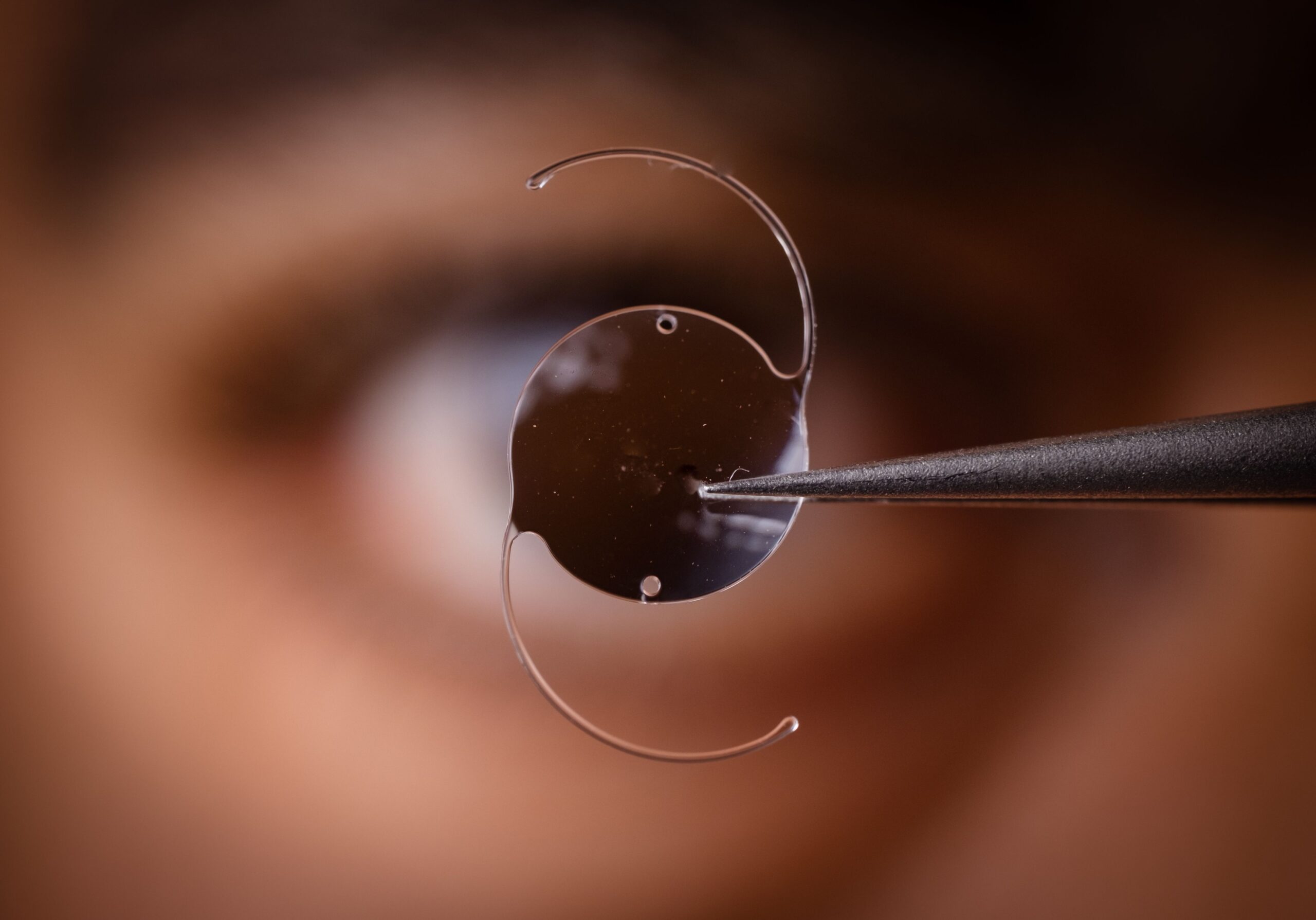
Quick Facts About Intraocular Lenses (IOLs):
- Intraocular lenses are human-made lenses that are inserted once the natural cloudy lens (cataract) has been removed
- These lenses are clear, lightweight and biocompatible which means they are not rejected by the human body nor do they typically require replacement after a period of time
- IOLs go through a rigorous approvals process with Health Canada and are proven to be safe, effective and constantly evolving in terms of features
- IOLs are typically grouped according to type (single-focus, toric astigmatism-correcting, extended focus, full range of vision), which will be detailed here. These groups are defined by the range of vision that can be expected without heavy reliance on glasses or contact lenses
- As with any customized medical device, an IOL is only as good as the measurements and individualized calculations and planning that are carried out. These tests and measurements are key to optimal outcome and function, particularly when there is a custom vision correction (or “refractive”) goal which benefits from upgraded testing.
Your Cataract Surgery: Rights & Informed Choices
The forms below can be downloaded in advance and reviewed with your surgeon or care team, so you can ask questions and ensure you’re aligned on your rights, options, and treatment plan before surgery.
Other Cataract Surgery Resources
The following are reputable online resources that you can utilize to learn more about cataract surgery:
Canadian Ophthalmological Society (COS)
General eye-health and cataract-surgery info for Canadians
See The Possibilities
A COS guide to cataract surgery
The Eye Physicians and Surgeons of Ontario (EPSO) Cataract SurgeryPatient‑Handout
What’s covered by OHIP, what optional services are, and what choices you have as a patient in Ontario
Optometrists’ Association of Ontario
An overview of cataract progression, when surgery is considered, and basic expectations post-surgery
Submitting Concerns or Complaints
If you have concerns about your cataract surgery, your surgeon, or the quality of medical care you received, you can submit a complaint to the College of Physicians and Surgeons of Ontario (CPSO).
Submit a complaint here: https://www.cpso.on.ca/en/Public/Services/Complaints-and-Concerns
If your concern relates to the experience at a hospital or community surgical centre (not an individual surgeon), you may also contact the Ontario Patient Ombudsman
Submit a complaint here: https://patientombudsman.ca/Complaints/Make-a-Complaint